Senior Dog Separation Anxiety: Causes & Gentle Solutions
Written by Sarah Jenkins | Canine Behaviour & Routine Specialist
It can be heartbreaking when a dog who spent years perfectly content home alone suddenly begins pacing, whining, or following you frantically from room to room as they reach their senior years.
While separation anxiety in young dogs often stems from lack of training or boredom, newly onset separation anxiety in senior dogs is almost always rooted in physical or cognitive changes. As sight, hearing, and mental acuity dim, your presence becomes your dog’s primary anchor for safety and orientation.
Understanding why these behavioral shifts happen allows us to adapt their routine with patience, empathy, and gentle adjustments.
1. Why Senior Dogs Suddenly Develop Separation Anxiety
When an older dog becomes unexpectedly vocal, destructive, or clingy when you prepare to leave, it is rarely a “bad habit.” Instead, it is usually triggered by age-related health shifts:
| Root Cause | How It Drives Separation Anxiety | Common Signs to Observe |
| Sensory Decline | Loss of sight or hearing makes unfamiliar background noises startling and disorienting. | • Pacing or hyper-vigilance when shadows move • Startling easily when startled out of sleep |
| Canine Cognitive Dysfunction (CCD) | Dog dementia disrupts circadian rhythms and internal sense of time and space. | • Wandering aimlessly or staring at walls • Nighttime restlessness and panting |
| Undetected Chronic Pain | Joint pain or spinal stiffness makes resting uncomfortable without reassurance. | • Difficulty finding a comfortable position • Licking paws or whimpering when left |
| Incontinence Stress | Older dogs naturally worry about toileting indoors if bladder control slips. | • Distress near back doors • Pacing immediately after drinking water |

2. Gentle Solutions for Home Comfort
Managing late-onset separation anxiety requires low-stress adjustments that restore your dog’s sense of security:
1. Create a “Sensory Anchor” Zone
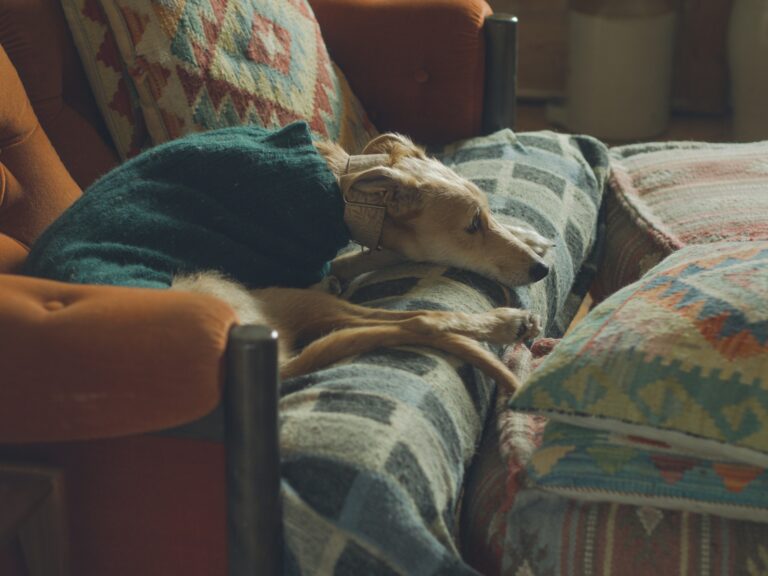
Designate a warm, ground-floor corner away from noisy draughts. Leave a soft garment you’ve recently worn (like an unwashed jumper) on their bed. Your familiar scent acts as a powerful nervous system calmer when you step out.
2. Low-Level White Noise or Radio
When a senior dog loses hearing crispness, absolute silence can amplify muffled outdoor sounds like cars or doors slamming. Leaving a radio tuned to soft speech or low classical music bridges the acoustic gap and masks alarming sudden noises.
3. Desensitise Departure Cues
Senior dogs tune in sharply to your leaving rituals. Practice picking up your car keys, putting on your coat, or opening the front door, but then simply sitting back down on the sofa. Breaking the link between keys and abandonment lowers baseline cortisol.
4. Provide Licking & Sniffing Enrichment
Licking releases natural endorphins in a dog’s brain. Before stepping out for short periods, offer a stuffed lick mat or rubber puzzle toy with a small smear of xylitol-free peanut butter or wet food.
3. When to Seek Veterinary Support
Because late-onset anxiety is heavily tied to physical health, a routine vet check is the vital first step. Your vet can screen for joint discomfort, check blood pressure, and discuss gentle calming supplements (such as L-tryptophan or pheromone diffusers) or prescription anti-anxiety support if cognitive changes are present.
Further Guidance on Behaviour & Daily Routines
Looking for more ways to keep your aging dog confident, calm, and happy at home? Explore our complete collection of advice in our Behaviour & Routine Hub