Caring for a Senior Dog When You Work Full Time
Balancing a full-time career with caring for a senior dog is one of the most emotional and logistically challenging aspects of pet ownership. When our dogs are young, leaving them for eight or nine hours a day with a quick morning walk and a toy is manageable. But as dogs cross into their senior years, their physical and cognitive needs change dramatically.
Senior dogs require more frequent bathroom breaks, rigid medication schedules, extra joint support, and emotional reassurance. Managing a 9-to-5 schedule while ensuring your older dog remains safe, comfortable, and happy requires a shift in your daily systems.
Here is our complete guide to restructuring your work life and home setup to care for your senior dog without burning out.
1. Adapting the Home Environment for Unsupervised Hours
When an older dog is left home alone, safety and accessibility become your top priorities. Reduced mobility, failing eyesight, and weaker bladder control mean your living space needs to be prepped before you walk out the front door each morning.
Create a “Safe Zone”
Rather than giving your senior dog free run of the entire house—where they might slip on hardwood floors or attempt to navigate dangerous stairs—confine them to a secure, single-level area. A ground-floor kitchen, utility space, or living room sectioned off with extra-tall baby gates works best.
- Non-Slip Flooring: Lay down rubber-backed runners, interlocking foam mats, or cheap yoga mats along their primary walking paths (especially between their bed and water bowl). Slipping while trying to stand up can cause severe joint strain or panic.
- Orthopedic Bedding Choices: Provide at least two bed options. Place a memory foam bed with raised bolsters in a draft-free corner, and ensure it sits on top of a non-slip rug so the bed doesn’t slide backward when they try to stand.
- Ambient Temperature Control: Senior dogs struggle to regulate their body temperature. In winter, set your thermostat to maintain a steady ambient warmth; in summer, ensure adequate ventilation, shades drawn against direct sunlight, and cool resting surfaces.
2. Managing Incontinence and Potty Breaks
Bladder capacity declines naturally with age, and conditions like canine kidney disease or arthritis can make holding it until 5:00 PM physically impossible.
Hiring Mid-Day Support
If your budget allows, hiring a trusted pet sitter or dog walker for a 20-minute mid-day check-in is the single best investment you can make. Specify that you do not need a strenuous 1-mile march; ask for a gentle “sniffari” around the garden, a water top-up, and fresh air.
Indoor Relief Options
For smaller dogs or situations where mid-day visits aren’t feasible:
- Real Grass Pads: Subscription grass boxes (like Porch Potty or Piddle Patch) are often accepted much faster by older dogs than plastic puppy pads because the texture and scent feel natural.
- Absorbent Washable Pads: If using artificial pads, lay down extra-large washable incontinence pads (the type designed for human medical care) underneath. They grip floor tiles better than flimsy disposable pads and prevent leakage underneath.
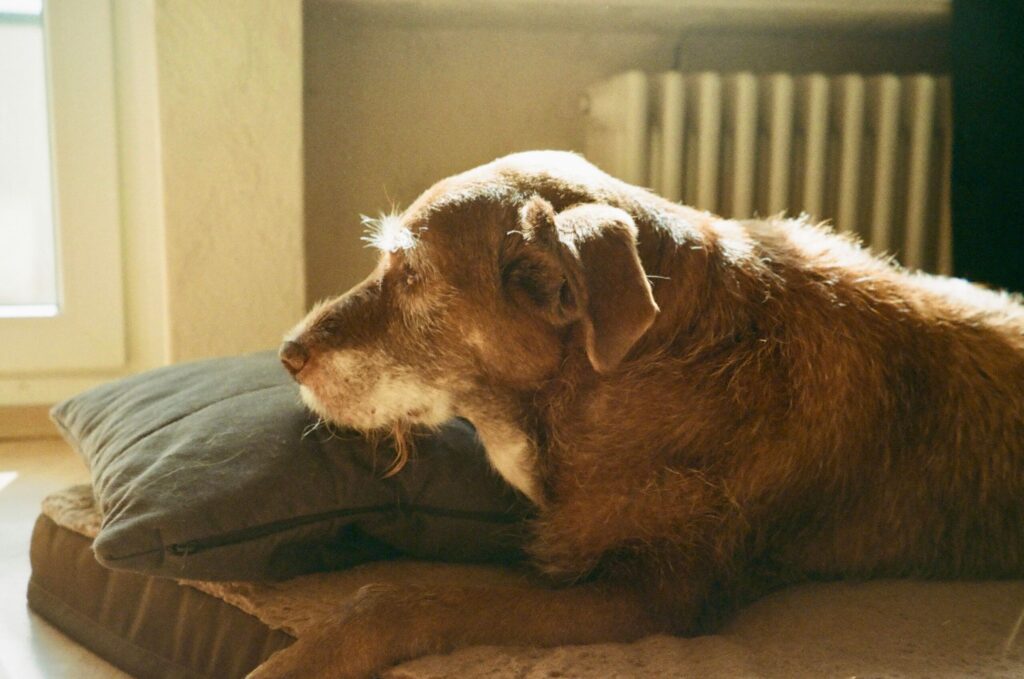
3. Tech-Assisted Monitoring: Peace of Mind for Working Owners
Modern smart home technology makes leaving a vulnerable senior dog far less nerve-wracking.
- Wi-Fi Pet Cameras: Position low-cost indoor cameras (such as Wyze or Tapo) at bed height. Look for models with two-way audio and night vision so you can check on them during lunch breaks.
- Motion and Noise Alerts: Set your camera to alert your phone if it detects persistent barking, howling, or pacing. Pacing or distress barking during mid-day hours can be an early indicator of Canine Cognitive Dysfunction (dementia) or pain flare-ups.
- Automated Feeders & Med Dispensers: If your dog requires strict, time-sensitive medication with food, automated timed bowls can open at 1:00 PM to deliver a small meal wrapped around a pill.
4. Establishing a Low-Stress Daily Routine
Senior dogs thrive on predictability. Establishing structured morning and evening rituals minimizes their anxiety when you leave for the day.
- The Morning Schedule: Wake up 15 minutes earlier to give your dog time to wake up slowly. Allow their joints to warm up before taking them out for a calm bathroom break. Feed them early so their digestive system settles before you depart.
- Low-Key Departures: Avoid making a fuss when leaving or returning home. High-energy greetings trigger anxiety spikes; keeping departures calm signals to your dog that your absence is completely routine.
- Evening Wind-Down: Dedicate 15 minutes after work to low-impact interaction—gentle brushing, a slow walk around the yard, or simple physical contact while relaxing on the couch.
Frequently Asked Questions
How long can a senior dog be left alone safely?
Most senior dogs should not be left unattended for longer than 4 to 6 hours without a potty break and mobility check. If your work day spans 8 to 10 hours including commute times, arranging mid-day support or a neighbor check-in is highly recommended.
Should I leave a TV or radio on for my senior dog?
Yes. Background noise from soft radio channels (like classic music or talk radio) helps mask sudden outdoor sounds that might startle an older dog with failing vision or heightened sensory anxiety.
The Bottom Line
Caring for an older dog while maintaining a full-time job isn’t about perfection—it is about management, safety, and comfort. By securing their environment, accommodating their physical limitations, and utilizing technology or local help, you can provide a safe, peaceful home for your companion throughout their golden years.
Do you balance a full-time job while caring for an older dog? What setups or routines have made the biggest difference in your home? Share your thoughts in the comments below!