Senior Dog Pacing at Night? Causes & Comfort Solutions
It’s 2:00 AM, and you’re woken by the familiar clack-clack-clack of claws pacing across the floorboards. You call your dog over, guide them back to their bed, but ten minutes later, they’re up again—wandering aimlessly, panting softly, or staring into a dark corner.
Nighttime restlessness and pacing in senior dogs is one of the most heart-breaking—and exhausting—challenges pet parents face. It’s easy to feel helpless, but this behaviour is rarely intentional stubbornness. In almost every case, nighttime pacing is a physical or cognitive response to getting older.
Understanding why your senior dog is pacing is the key to bringing calm and peaceful sleep back to your home. Here are the primary causes behind senior dog night pacing, alongside practical ways to comfort them.
1. Pacing at Night – Common Causes
When the house goes quiet and dark, subtle aches, anxieties, and confusion become much harder for an older dog to ignore.
Canine Cognitive Dysfunction (CCD) / “Sundowning”
Just like humans with dementia, senior dogs can suffer from cognitive decline. One classic sign is “sundowning”—a period of increased confusion, disorientation, and anxiety that kicks in during late afternoon and evening as natural light fades. (For a complete breakdown of early symptoms, read our detailed guide on Canine Cognitive Dysfunction in Senior Dogs). A dog with CCD may lose track of where they are, forget their routine, or struggle to settle down to sleep.
Expert Insight: National coverage by Countryfile and veterinary specialists highlights that early signs of Canine Cognitive Dysfunction—like evening confusion or nighttime pacing—are often misread as simple old age. Identifying these shifts early allows for timely veterinary support and environment tweaks.
Joint Stiffness and Arthritis Pain
Lying in one position for hours puts pressure on stiff, arthritic joints. If your dog suffers from hip dysplasia, arthritis, or spinal stiffness, staying still can actually cause them discomfort. They may pace simply because moving around temporarily relieves the ache in their joints.
Loss of Vision or Hearing
As dogs age, cloudy eyes (cataracts or nuclear sclerosis) and hearing loss make navigating in pitch-black rooms distressing. Shadows look unfamiliar, and the lack of familiar sensory cues can trigger mild panic, causing them to pace near doors or human beds for reassurance.
Incontinence or Increased Urination Needs
Kidney changes, diabetes, or age-related sphincter weakness mean older dogs often need to relieve themselves during the night. Pacing, whining, or walking back and forth to the back door is often their only way of telling you they urgently need to go outside.
2. How to Help Your Senior Dog Sleep Soundly
Solving nighttime pacing usually requires a combination of routine adjustments, home tweaks, and veterinary advice.
Create a Safe, Lit “Night Path”
If vision loss or confusion is driving the anxiety, don’t leave your dog in total darkness.
- Place plug-in LED nightlights in hallways, near their bed, and near the water bowl.
- Keep their sleeping area free of clutter so they don’t get trapped behind furniture or trip over loose rugs.
Upgrade to an Orthopaedic Memory Foam Bed
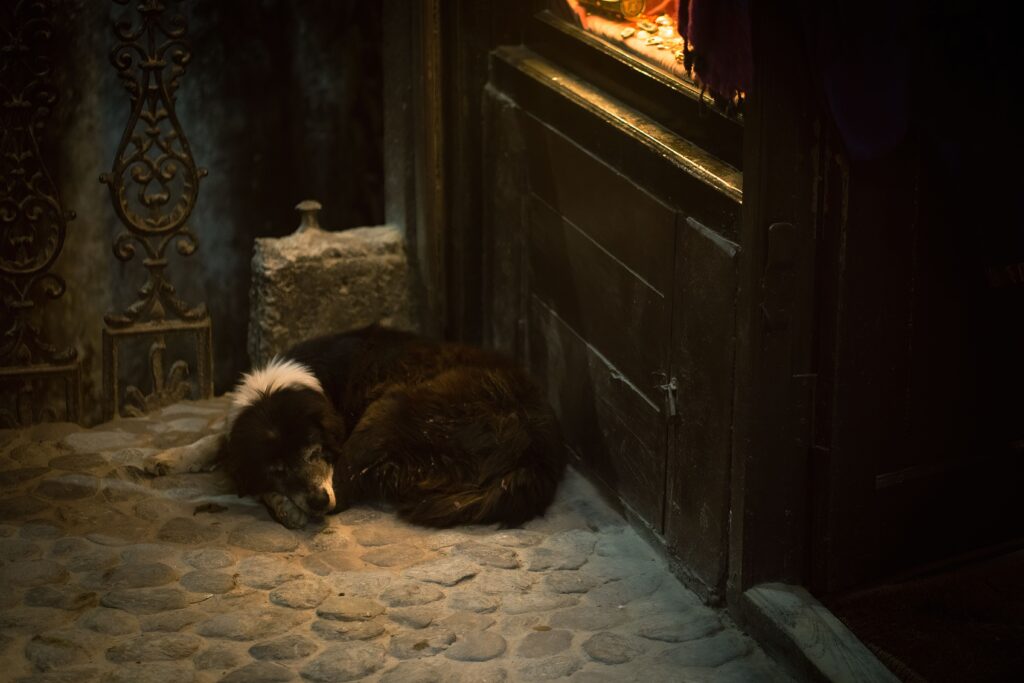
A standard fiber-filled dog bed flattens under weight, leaving stiff joints resting against the hard floor. High-density orthopaedic memory foam beds distribute their weight evenly, relieving pressure points on hips and shoulders so they can sleep longer without needing to shift positions. (See our top tested recommendations in our guide to the Best Orthopedic Beds for Senior Dogs).
Establish a Gentle Evening Wind-Down Routine
- A Calming Evening Walk: A slow, sniff-focused walk 1–2 hours before bed helps tire out their mind without overexerting their joints.
- Late Toilet Break: Take them out right before you turn off the lights to ensure their bladder is completely empty.
- Calming Environment: A warm room, gentle background audio (like soft classical music or white noise), and an old t-shirt with your scent can reassure anxious dogs.
3. When to Speak to Your Vet
While home adjustments make a huge difference, nighttime pacing shouldn’t be managed alone. Schedule a visit with your vet to rule out underlying pain or medical conditions.
Your vet may discuss:
- Pain Management: Anti-inflammatory medications or joint supplements (such as Omega-3 fatty acids or Green-Lipped Mussel) to ease evening joint ache.
- Dietary Supplements: Specialized veterinary diets rich in antioxidants and B vitamins designed to support cognitive function.
- Prescription Calming Aids: In cases of severe CCD or sundowning anxiety, your vet can recommend targeted medication to regulate sleep cycles.
Summary: Bringing Calm Back to the Night
Nighttime pacing in older dogs is a plea for help, not bad behaviour. By introducing gentle night lighting, supportive bedding, and working closely with your vet to address hidden pain or cognitive shifts, you can help your loyal companion—and yourself—get the restful sleep you both deserve.
Recommended Next Steps for Behaviour & Health
Want to explore more practical strategies for managing anxiety, sleep cycles, and routine adjustments in older dogs? Visit our dedicated Behaviour & Routine Hub.