Travel Safety for Senior Dogs: Harnesses, Crate Comfort, and Long Trips
Taking a road trip with a senior dog can be a wonderful bonding experience, but as dogs age, car journeys require a bit more planning. Stiffness from arthritis, reduced stability during sudden braking, anxiety, or age-related incontinence can turn a simple drive into a stressful ordeal if your car setup isn’t adapted for an older dog’s needs.
Whether you are heading out for a weekend getaway or taking a short drive to a scenic park, ensuring your senior dog is secure, comfortable, and well-supported is essential. Here is our practical guide to travel safety, crash-tested harnesses, crate setups, and long-distance road trip tips for senior dogs.
1. Choosing the Right Restraint: Crash-Tested Harness vs. Secured Crate
In the UK and many other regions, highway codes state that dogs must be suitably restrained so they cannot distract the driver or injure passengers in a sudden stop. For an older dog, the right restraint also provides crucial physical stability during turns and braking.
Crash-Tested Travel Harnesses
- Why they work: A padded, crash-tested travel harness distributes impact forces evenly across the chest rather than the delicate neck or spine.
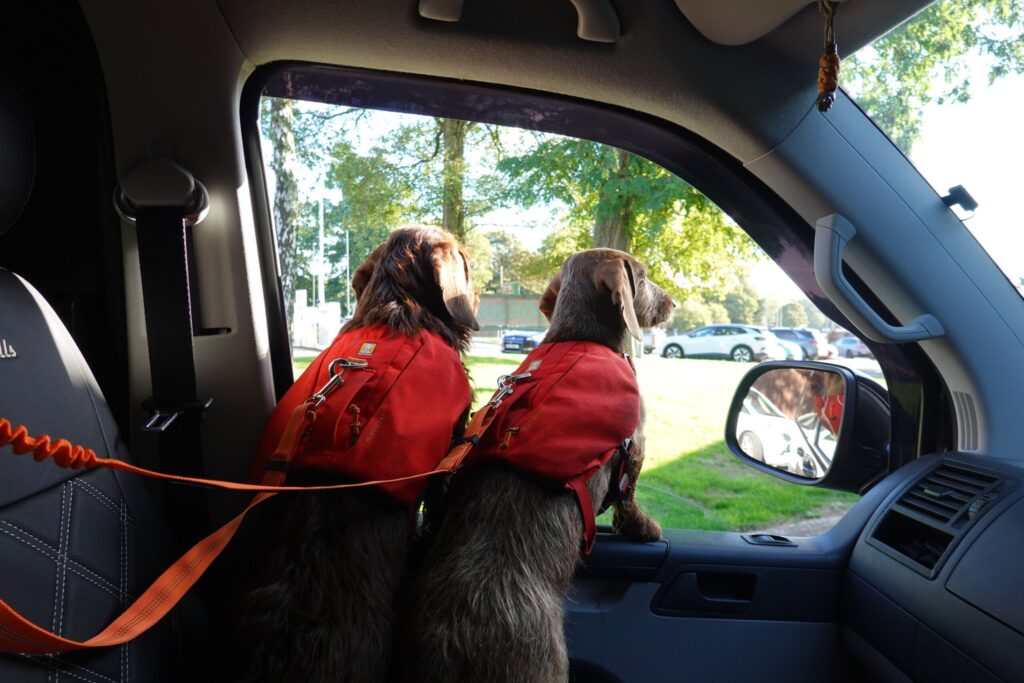
- Senior benefit: Stiffness makes it harder for older dogs to brace themselves when the car turns or slows down. A supportive harness attached to a seatbelt tether keeps them securely in place on the seat, preventing them from sliding onto the floorboards.
- Look for: Harnesses certified by recognized safety testing bodies (such as CPS – Center for Pet Safety) with wide, padded chest plates.
Crate Comfort for Older Dogs
- Why it works: Many dogs feel most secure in an enclosed crate where they don’t have to watch the scenery speed by, which can reduce motion sickness and visual stress.
- Senior setup: Ensure the crate is large enough for your dog to stand up, turn around, and lie flat out. Line the bottom with a thick, non-slip orthopaedic bed or memory foam mat to cushion their joints against road vibration.
2. Safe Loading & Unloading: Protecting Stiff Joints
One of the biggest risks during travel happens before the car even moves: jumping in and out.
An older dog jumping down from an SUV or high car boot places immense impact load on their front elbows, shoulders, and wrists. Over time, this causes severe joint flare-ups or ligament tears.
- Use a Folding Dog Ramp or Car Steps: Train your dog to use a lightweight, non-slip ramp or folding steps to walk into the vehicle gently.
- Supportive Lifting: If your dog is comfortable being lifted, support their rear quarters and chest simultaneously. Never lift an older dog under their front armpits, as this strains stiff shoulder joints.
3. Managing Comfort & Motion Sickness on Long Trips
Longer car journeys require extra attention to temperature, hydration, and movement breaks.
Schedule Frequent Rest Stops (Every 2 Hours)
Stop every two hours at a quiet service station or grassy area. Allow your senior dog to stretch their legs with a short, gentle 5-minute walk. This prevents joint stiffness from settling in and gives them a chance to relieve themselves.
Maintain Temperature & Airflow
Older dogs struggle to regulate their body temperature, especially in warm weather or heavily heated cars:
- Keep rear air vents open or use window shades to block direct sunlight.
- Never leave a senior dog unattended in a parked car, regardless of the season.
Non-Slip Seating Surfaces
Leather or slick fabric seats offer zero traction. If your dog travels on the back seat, use a heavy-duty, waterproof hammock-style seat cover with a rubberized non-slip bottom. This prevents their paws from slipping out from under them during the ride.
4. Packing List for Senior Travel
Before heading out on a long trip, keep these essential items easily accessible in your car:
- Medications & Joint Supplements: Packed in original containers with clear dosage instructions.
- Fresh Water & Portable Bowl: Offer small sips of water at every rest stop.
- Absorbent Puppy Pads / Waterproof Liners: Accidents happen, especially on longer trips. Layering an absorbent pad over their travel bed gives peace of mind.
- Familiar Bedding: Bringing a blanket from home that smells like their main resting area provides instant anxiety relief in unfamiliar surroundings.
The Bottom Line
Traveling with a senior dog doesn’t have to be daunting. By investing in proper restraints, protecting their joints during loading, and taking regular rest breaks, you can keep your aging companion safe, comfortable, and happy on every adventure.
How does your senior dog handle car journeys? Share your favourite travel tips or favourite ramp recommendations in the comments below!