

The Complete Senior Dog Mobility & Joint Care Guide
Written by Gemma Hughes | Senior Canine Mobility & Joint Specialist
Welcome to the Mobility & Joint Care Hub
Hello, I’m Gemma. If you’ve noticed your older dog rising a little more slowly from their bed, pausing hesitantly at the stairs, or clicking their paws across hardwood floors, you are far from alone.
As our dogs enter their golden years, changes in joint health, spinal flexibility, and muscle mass (sarcopenia) are natural. However, stiffness and arthritis do not have to mean the end of happy, comfortable daily walks and playful afternoons. With small, targeted adjustments to your home environment, daily exercise routines, and dietary support, you can dramatically improve your senior dog’s quality of life and confidence.
This hub is designed as your master resource for everything related to senior dog joint health, mobility aids, and home accessibility in the UK.
Read our most recent published articles in Mobility & Joint Care
Below you’ll find all our latest published in-depth reviews, buyer’s guides, and care advice for keeping your senior dog moving comfortably:
-
Managing Knuckling in Senior Dogs: Causes, Boots, and Rehabilitation Exercises
Noticing your senior dog drag a back paw, scuff their nails along the pavement, or stand with the top of their toes curled under is an alarming sight. Known in veterinary medicine as knuckling (or loss of conscious proprioception), this movement pattern occurs when a senior dog’s brain and nerves fail to communicate quickly enough…
-
How to Build or Buy a DIY Threshold Ramp for Senior Dogs Struggling with Doorways
A single two-inch doorway lip or patio step rarely registers to a healthy young dog. To a senior dog living with hip dysplasia, spinal arthritis, or hind leg weakness, that minor raised edge can become an insurmountable wall and its time for a threshold ramp. When a senior dog hesitates at a doorway, lowers their…
-
Senior Dog Toe Grips vs. Non-Slip Boots for Wooden Floors
Helping you to choose between senior dog toe grips or non slip boots. Watching a senior dog struggle to stand on smooth wood or tiled flooring is heart-wrenching for any owner. As dogs grow older, weakening hind legs, reduced grip strength, and progressive joint stiffness from conditions like canine arthritis make slick surfaces feel like…

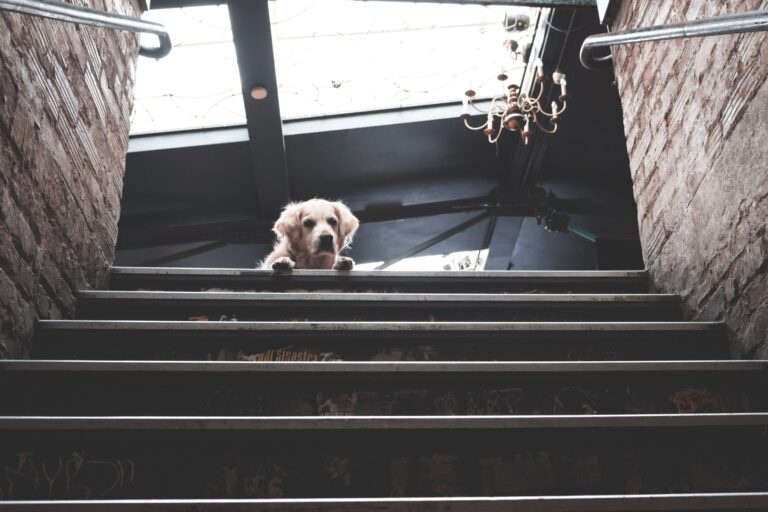

Browse all of our published articles in Mobility & Joint Care
Below you’ll find all our published in-depth reviews, buyer’s guides, and care advice for keeping your senior dog moving comfortably:
-
Managing Knuckling in Senior Dogs: Causes, Boots, and Rehabilitation Exercises
-
How to Build or Buy a DIY Threshold Ramp for Senior Dogs Struggling with Doorways
-
Senior Dog Toe Grips vs. Non-Slip Boots for Wooden Floors
-
Gentle Exercise For Older Dogs with Stiff Joints
-
Dog Steps vs Ramps for Sofas and Beds: Which Is Safe?
-
Best home Hydrotherapy and Massage Techniques for Stiff Dogs
1. Understanding Senior Dog Joint Changes
As dogs age, the protective cartilage lining their joints gradually thins, leading to friction, inflammation, and stiffness—commonly known as canine osteoarthritis. Recognizing the early signs allows you to intervene before your dog experiences significant pain:
- Stiffness after resting: Difficulty getting up after sleeping, especially on cold mornings.
- Slipping on smooth floors: Reluctance to walk across laminate, wood, or polished tile floors.
- Hesitation at steps or cars: Stopping at stairs, furniture, or the boot of the car before attempting a jump.
- Licking at joints: Repeatedly licking wrist (carpal) or ankle (hock) joints due to localized ache.
2. Practical At-Home Mobility Solutions
Protecting your senior dog’s joints starts inside your home. Everyday slips and sudden twists cause micro-trauma that accelerates joint degradation.
Flooring & Traction
Hardwood and laminate floors are the primary culprit for senior dog falls in modern UK homes. Placing non-slip runner rugs along frequent walkways or outfitting your dog with traction footwear provides immediate stability.
- 📖 Featured Guide: 13 Best Non-Slip Dog Socks & Boots for Hardwood Floors UK Discover the top-rated indoor grip socks and boots to stop slipping on laminate and tiles.
3. Joint Support & Supplements
Nutritional support plays a pivotal role in cushioning joints and reducing systemic inflammation. Key ingredients to look for in senior joint formulations include:
- Glucosamine & Chondroitin: The fundamental building blocks for cartilage repair and fluid retention.
- Green-Lipped Mussel (GLM): Rich in Omega-3 fatty acids (ETA) that naturally soothe stiff, aching joints.
- Hyaluronic Acid: Supports joint lubrication to improve smooth movement.
- 📖 Recommended Reading:
4. Daily Exercise & Routine Adjustments
When managing joint stiffness, the golden rule is “Little and Often.”
- Swap long weekend hikes for two or three shorter, gentle 15-minute strolls throughout the day.
- Warm-up gently: Allow your senior dog 5 minutes of slow sniffing around the garden before heading down the pavement.
- Avoid high-impact play: Replace fetch games with mental enrichment and scent work to preserve joint health while keeping their brain active.
Have a Specific Mobility Question?
If you’re unsure which mobility support or home adjustment is right for your dog’s specific needs, explore our adjacent guides in Everyday Living & Gear or reach out through our community channels!