How to Help an Older Dog Lose Weight Safely
As our dogs enter their senior years, their metabolism naturally slows down. Combined with reduced exercise due to stiff joints or lower energy levels, it is remarkably easy for an older companion to gradually put on excess weight.
While a few extra pounds might not seem urgent, carrying excess weight is particularly damaging for senior pets. Weight gain places unnecessary stress on aging joints, exacerbates arthritis, strains the cardiovascular system, and can shorten a dog’s overall lifespan.
However, putting a senior dog on a crash diet can backfire, causing loss of vital muscle mass or nutritional deficiencies. Here is how to help your older companion lose weight safely, gently, and sustainably.
1. Why Senior Dogs Gain Weight So Easily
Understanding the biological shifts that happen as dogs age makes managing their diet much easier:
- Slower Metabolic Rate: Older dogs require roughly 20% to 30% fewer calories than they did during their prime adult years just to maintain their body weight.
- Loss of Lean Muscle: As dogs age, natural muscle atrophy occurs. Because muscle tissue burns more calories at rest than fat tissue, losing muscle further reduces daily caloric burn.
- Reduced Mobility: Stiff hips or aching knees naturally lead to shorter daily walks, meaning fewer calories are burned throughout the day.
If you continue feeding the exact same food portion size to an eight-year-old dog that you fed them when they were three, they will inevitably gain weight.
2. Check the Body Condition Score (Not Just the Scales)
Stepping on a scale at the vet is helpful, but the Body Condition Score (BCS) is the most accurate visual and tactile way to measure your dog’s weight at home.
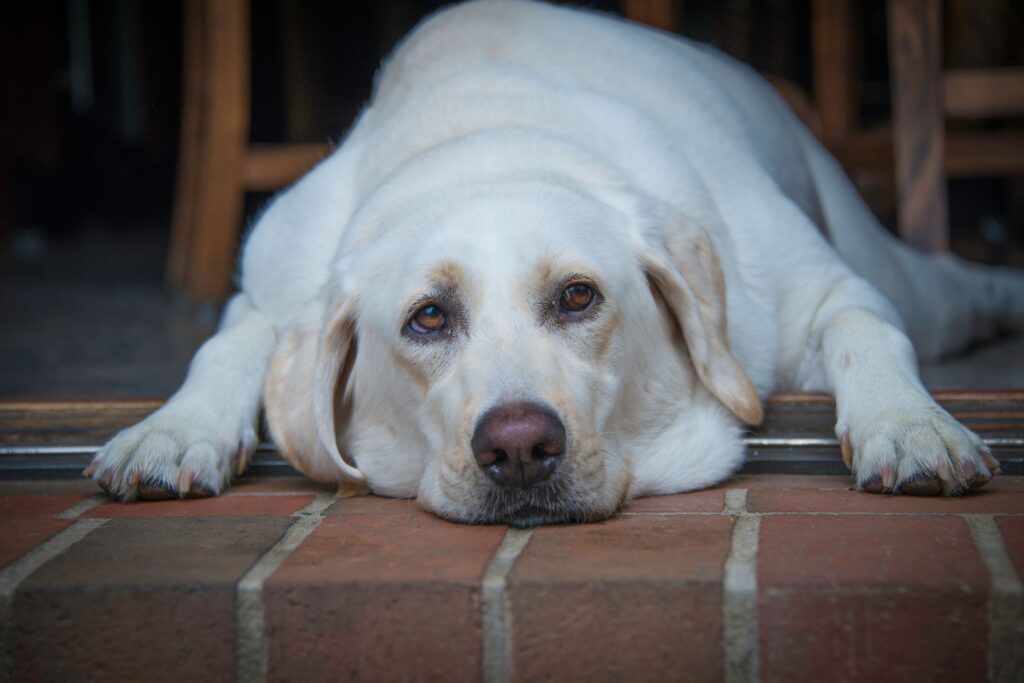
- Rib Check: Gently run your hands along your dog’s ribcage. You should easily feel their ribs beneath a thin layer of coat and fat, without having to press firmly. If you have to dig your fingers in, they are carrying excess weight.
- Tuck & Waist: Look down at your dog from above. There should be a visible waistline tucked in behind their ribs. Look from the side; their abdomen should slope upward from their chest to their hind legs.
- Fat Pads: Look for subtle fat deposits resting over their lower back, tail base, or shoulders.
Mark’s Nutrition Tip: Aim for a slow, steady loss of 1% to 1.5% of their total body weight per week. Losing weight too quickly can lead to muscle wasting, lethargy, and nutritional imbalances.
3. Adjust Calories Without Sacrificing Satiety
The biggest mistake owners make is simply cutting their dog’s normal food intake in half. This leaves the dog feeling perpetually hungry, leading to begging, scavenging, or distress.
Transition to a Dedicated Senior or Weight-Management Diet
Standard adult formulas are often dense in fats and calories. Dedicated senior or light formulas feature reduced fat content while boosting dietary fiber and protein. The elevated fiber keeps your dog feeling full and satisfied after meals, while protein protects lean muscle mass.
The “Green Bean Hack”
If you prefer not to switch your dog’s base food immediately, try substituting 10% to 20% of their daily kibble allowance with plain, unsalted cooked green beans or steamed pumpkin. These add bulk and fiber to the meal bowl with virtually zero calories, keeping your dog’s bowl looking full.
4. Rethink Treats and Hidden Calories
In many British households, the main meals aren’t the problem—it’s the cumulative daily treats, dental sticks, and table scraps.
- Count Every Calorie: Treats should never account for more than 10% of your dog’s daily caloric intake.
- Beware of Commercial Dental Chews: Many popular high-street dental sticks contain upwards of 100 to 150 calories per stick, which can equal up to a third of a smaller senior dog’s total daily allowance.
- Switch to Healthy Low-Calorie Alternatives: Swap processed treats for raw carrot sticks, cucumber slices, fresh blueberries, or small pieces of air-dried lung.
- Weigh Meals Daily: Stop using coffee mugs or plastic scoops to measure food. Using a digital kitchen scale ensures pinpoint accuracy and prevents portion creep.
5. Safe, Low-Impact Exercise
Exercise remains vital for keeping joints lubricated and maintaining muscle, but it must be tailored to an older dog’s physical limitations.
- Multiple Short Walks: Instead of one long 45-minute trek that leaves your dog exhausted and sore, split exercise into two or three gentle 15-minute sniff-walks across flat terrain.
- Hydrotherapy: Hydrotherapy in a warm underwater treadmill is one of the safest ways for overweight, arthritic dogs to burn calories and build leg strength without placing weight-bearing stress on their joints.
- Mental Stimulation: Sniffing games, lick mats, and puzzle toys burn mental energy and reduce food-seeking boredom without requiring strenuous physical effort.
Summary: A Gentler, Brighter Golden Age
Helping an older dog achieve a healthy body weight is one of the greatest gifts you can give them. By reducing the physical strain on their joints, you instantly restore mobility, improve energy levels, and make their day-to-day life noticeably more comfortable.
Recommended Next Steps for Senior Nutrition
Want to learn more about tailored nutrition and digestive supplements for older dogs? Explore our full collection of guides in our Diet & Wellness Hub